
One Frame
Two days | One to one | Cambridge, London, or a city of your choosing
Once you learn to see on your own terms, things become easier. This is built around that shift.
It is not a workshop in the sense you probably know it. It is a private deep practice, two days long, shaped entirely around one person, you. We walk, we work on attention, presence and human connection before the camera is introduced. Photography comes last, only after absorption and recognition. We work on when to wait, when to approach, and when not to photograph at all. The process is quiet, personal, and deliberately limited.
Day One — Walking, observing, thinking
The first day unfolds without pressure to produce. We walk slowly through the city, letting pace replace intention. The camera stays secondary, often out of the hand. Attention shifts from finding images to noticing when the urge to photograph appears — and when it passes. We read people and spaces without intervening, allowing moments to form and dissolve on their own. Hesitation is treated as information rather than doubt. We pause, change direction, and let moments close without extraction. The work of the day is not photographs. It is restoring sensitivity to instinct, rhythm and presence.
Day Two — Waiting, then Photographing
The second day begins the same way, with slowness and attention. The camera is reintroduced carefully no longer something to reach for, but something to wait with. Photographing happens only after presence is established. No repetition, no accumulation. One frame per moment, or none. Later we look at the images quietly. Editing becomes an act of respect: deciding what holds without defence, and letting the rest fall away. The day closes with one image. Not the strongest — the one that remains.
What you leave with
One image that holds, and others to learn from. A repeatable, personal way of seeing — the confidence to think about the instinct instead, to hold back or step forward with people, and to read light, pattern and flow as you move through a place. A signed print of your chosen image on washi, made by me and sent within three weeks. And a follow-up conversation, one hour, six weeks later — because the shift takes hold once you're home, or it doesn't take hold at all.
Who this is for
You already know your camera. Technique was settled a long time ago — and in a way that's part of it, because once everything is possible, very little feels necessary.
You might be a film photographer who develops at home, or someone who has carried the same rangefinder for fifteen years and would not be parted from it. You might work in medium format, slowly, or with one fixed lens and nothing else, or on a phone because it's the camera that's always with you. You might have come back to photography after years away, with rolls in a drawer you've never printed. You might do something else entirely for a living — medicine, architecture, law, teaching — and find this is the part of the week where you think most clearly. None of it matters much here. Two days in, the camera stops being the subject.
You can more or less predict your own photographs before you make them: the angle you tend to find, the distance you tend to keep. It still works. That's what makes it difficult to set down.
Somewhere there's a gap between what you felt in a place and what you brought home from it. You've noticed it, and you'd rather look at it than explain it away.
You're open to two days without a guaranteed result — to coming back with one frame, or none, and being alright with that.
It helps to know how the days work: I'll be alongside you while you photograph, and I may ask why you chose not to lift the camera. It's curiosity, not assessment, and most people find it useful — but worth knowing in advance.
This won't sharpen a portfolio or bring in clients. It's two days of slowness, in good company, with someone paying close attention to how you see.
If you want instruction, this isn't it. If you want alignment, it might be.
Practicalities
Two days, one to one · £1450,00
Digital or analogue, either is welcome
Coffee and lunch are on me
Outside the UK, travel and accommodation are covered by the participant
I take six participants of these a year.
How to begin
Write to me and tell me why now. If it fits and I am sure it will, we'll talk for half an hour before either of us commits.
Contact
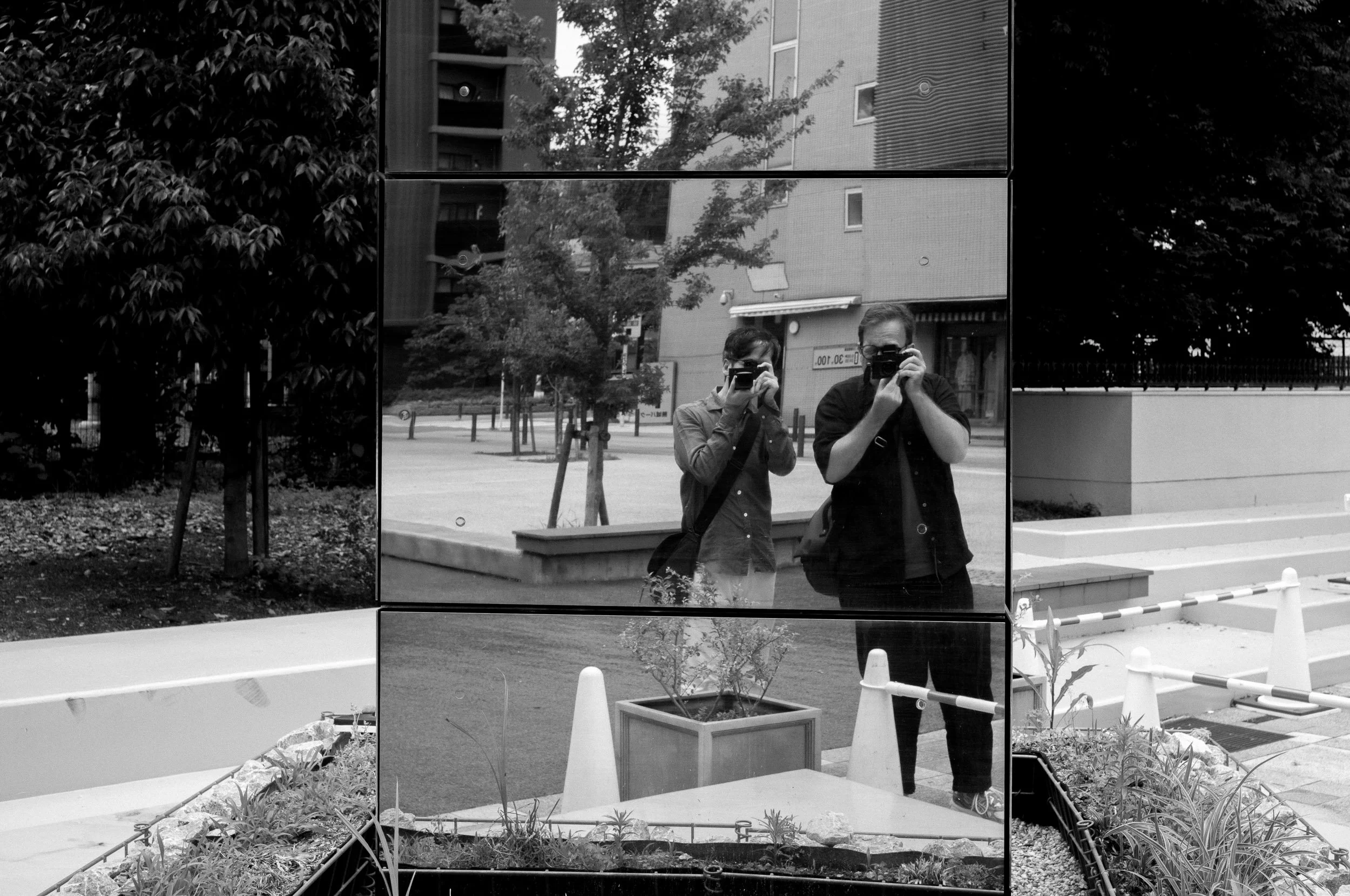
Two days, one person, no curriculum.
We walk slowly before the camera is introduced; the second day ends with a single photograph.
Not a workshop. A private practice.